Learn more about Spodek Law Group and how we can help with your case.
You think prosecutors need your confession to prove PPP fraud. You think they need witnesses. You think they need you to admit something. You think without that admission, they can’t prove you intended to commit fraud.
Your bank statements already confessed for you.
Welcome to Spodek Law Group. Our goal is to tell you what other websites won’t: in Columbus and the Southern District of Ohio, prosecutors have perfected spending-based prosecution. Lorie Schaefer got 70 months. Not because she admitted anything. Because her bank records showed $26,000 at a liposuction clinic, $900,000 on home renovation, and property purchases in Australia. Every swipe of her card after receiving PPP funds became evidence of criminal intent. The moment you spent PPP money on anything personal – DoorDash, Louis Vuitton, a vacation, cosmetic surgery – you created documentary proof that you never intended to use the money for payroll.
If you’re facing PPP fraud charges in Columbus, if the FBI has contacted you about pandemic relief loans, if you’ve received a target letter from the U.S. Attorney’s Office – your spending has already told prosecutors everything they need to know.
When Your Bank Statements Become Evidence
Most people think proving fraud requires a confession. An admission. Someone saying “yes, I intended to steal this money.” Without that admission, how can prosecutors prove what was in your head when you submitted that application?
In the Southern District of Ohio, prosecutors prove intent through spending. They subpoena your bank records from the day PPP funds hit your account. They trace every transaction. They categorize every purchase. And they present that spending to juries as documentary evidence of what you actually intended when you applied for those loans.
Here’s how this works in practice. You received PPP funds. The program required you to use the money for payroll, rent, utilities, and other qualifying business expenses. Instead, you spent some of it on personal items. Maybe a nice dinner. Maybe some clothes. Maybe a vacation. Each of those transactions becomes evidence that you never intended to use PPP for legitimate purposes.
The logic is straightforward and devastating. If you intended to use PPP money for payroll, why did you spend $26,000 on liposuction? If you planned to keep employees paid, why did you buy property in Australia? If your business legitimately needed pandemic relief, why did your bank statements show purchases at Louis Vuitton, Michael Kors, and Kay Jewelers?
Your bank statements are already being analyzed – every purchase since you received PPP funds is potential evidence. Prosecutors dont need your confession. They have something better. They have a complete record of everywhere your money went. And that record tells them exactly what you intended to do with PPP funds from the moment they arrived.
The Schaefer Case: $26,000 on Liposuction, 70 Months in Prison
Let me show you exactly how spending-based prosecution works in Columbus.
Lorie Schaefer was 63 years old. She lived in Westerville, a suburb of Columbus. In 2020, she submitted a PPP application claiming affiliation with Flying Pizza restaurants in Dayton, Centerville, and Fairborn. She claimed to have 98 employees. She submitted altered bank records. She requested nearly $1.9 million.
OK so heres what happened when investigators contacted the actual Flying Pizza owners. They said they didnt know Lorie Schaefer. They said there restaurants couldnt justify such a large loan. They said the business was established in 1984 – not March 2021 as Schaefer claimed. The application was obviously fraudulent.
But the spending evidence is what destroyed any possible defense.
Bank records showed Schaefer used PPP funds for personal expenses. Nearly $26,000 on liposuction. A $10,000 check for a “newborn baby gift.” More than $900,000 to purchase and renovate a home in Westerville. Purchases at Wayfair. Purchases at Lamps Plus. Purchases at Kroger, KFC, Burger King, Arby’s, McDonald’s, and Olive Garden. Vehicles in Ohio. Property in Australia.
Think about what this spending proves. Someone who legitimatly needs PPP for payroll dosent spend $26,000 on liposuction. Someone who intends to keep employees paid dosent buy property in another country. Someone who applied in good faith dosent renovate a $900,000 home while claiming pandemic hardship. The spending itself proves the intent.
On June 17, 2025, U.S. District Court sentenced Schaefer to 70 months in federal prison. Nearly six years. The court ordered $2,312,805 in restitution with her co-defendant. She also had to forfeit more than $2.8 million – everything she fraudulently obtained.
Heres something else that matters. After being charged, Schaefer violated her pre-trial release multiple times. Her bond was revoked. She pleaded guilty in July 2024 and then twice tried to withdraw her plea. The court wasnt sympathetic. When your bank records already prove your guilt, procedural games just make things worse.
Schaefer also helped a co-defendant, Latisha Holloway of Reynoldsburg, fraudulently receive over $980,000 in PPP loans. Holloway claimed to own “Jaguar Logistics” with 76 employees and $4.9 million in gross income. The total fraud between them exceeded $2.8 million. Both prosecuted. Both convicted. Both sentenced based largely on what there spending revealed about there intent.
What Columbus Sentences Actually Look Like
Let me show you whats actualy happening in the Southern District of Ohio right now. Not guidelines. Not hypotheticals. Real sentences from real cases where spending evidence drove the prosecution.
Lorie Schaefer – Westerville. $2.8 million fraud with co-defendant. Liposuction, home renovation, Australia property. Sentence: 70 months. Restitution: $2,312,805.
Joseph Lentine III – Cincinnati. Ringleader of multi-million dollar scheme. Sentence: 63 months. Restitution: $1.2 million to SBA, $33,000 to Ohio DJFS.
Kelton McClarrin – Cincinnati. $21,000 fraud. DoorDash, GrubHub, jail commissary. Sentence: 18 months.
Kelli Prather – Cincinnati. $1.2 million requested. Convicted on 6 counts bank fraud (30 years max each), wire fraud, false statements, aggravated identity theft.
Ajay & Ruhi Chawla – Transportation company owners. $900,929 fraud. $150,000 on unallowable uses. Pleaded guilty June 2025. Awaiting sentencing.
Heres the pattern in these sentences. The spending evidence determines severity. Schaefer got 70 months because her spending was so obviously personal – liposuction, home renovation, foreign property. McClarrin got 18 months for much less money but similarly obvious personal spending. The prosecutors dont just prove you misused funds. They prove your spending demonstrates you INTENDED to misuse them from the beginning.
And the financial consequences are permanant. Schaefer owes over $2.3 million that she cant discharge in bankruptcy. Lentine owes $1.2 million. These amounts will follow them forever. Wages garnished. Tax refunds intercepted. Assets seized whenever they acquire anything of value. The forfeiture dosent end when prison ends. For defendants whose spending revealed there intent, the financial consequences ensure they’ll never benefit from what they stole.
The sentences keep getting harsher. Defendants sentenced in 2024-2025 receive significanly longer sentences then those sentenced in 2021-2022. Judges in the Southern District have seen the spending patterns now. Theyve processed dozens of cases. They know what DoorDash spending means. They know what liposuction means. They know what Australia property means. The window for claiming ignorance or mistake has completly closed.
The investigation methodology has gotten increasinly sophisticated. The Pandemic Response Accountability Committee Fraud Task Force coordinates FBI, IRS Criminal Investigation, DOT-OIG, and SBA-OIG into a unified investigation machine. When multiple agencies work together on your case – and they do for virtualy every PPP prosecution – they find everything. The FBI traces bank transactions. IRS-CI cross-references tax returns against claimed income. DOT-OIG examines transportation-related fraud. SBA-OIG analyzes application details. Nothing slips through.
And prosecutors have developed standardized methods for presenting spending evidence to juries. They create visual timelines showing PPP disbursement on one end and personal purchases on the other. They calculate percentages – what portion of PPP funds went to qualifying expenses versus personal spending. They present category breakdowns showing exactly how much went to cosmetic surgery, how much to home renovation, how much to luxury retail. The presentation is designed to make spending patterns undeniable.
Heres something else practitioners understand about Columbus prosecutions. The spending evidence often leads to additional charges beyond basic wire fraud. When you convert PPP funds to real estate, thats potentialy money laundering under 18 USC 1956. When you use someone elses business identity like Schaefer did with Flying Pizza, thats potentialy identity fraud. When you submit false applications for forgiveness after spending money improperly, thats additional wire fraud charges. The spending dosent just prove intent – it generates additional counts that stack sentences higher.
The Spending Categories That Destroy Defenses
Here’s were most defendants make the mistake that costs them years.
approval rate for properly filed expungement petitions in NJ
reduction in pretrial jail population since NJ bail reform
Statistics updated regularly based on latest available data
Saying 'my accountant told me to do it' isn't automatic protection. You need documentation of the advice AND proof you followed it exactly as given.
Returning items you didn't buy, using fake receipts, or 'wardrobing' (wearing and returning) isn't a minor issue – it's felony theft with serious consequences.
You think you can explain your spending. You think you can argue the purchases were business-related. You think prosecutors cant prove what was in your head just from bank records.
Columbus prosecutors have heard all of this before. And they have specific responses for every category of spending.
Medical procedures – Especialy cosmetic procedures like liposuction, body contouring, or other elective surgeries. These prove personal benefit. No business needs its owner to get liposuction to survive the pandemic. Schaefer’s $26,000 at a cosmetic clinic. Wright’s $10,000+ at Sono Bello. These purchases are indefensible.
Home purchases and renovations – Schaefer spent $900,000 on a Westerville home. That spending proves asset conversion – taking PPP money meant for payroll and converting it to personal real estate. You cant argue you needed pandemic relief while buying and renovating property.
Luxury retail – Louis Vuitton. Michael Kors. Kay Jewelers. Saks. Lacoste. Puma. These purchases prove lifestyle enhancement. A business struggling through the pandemic dosent buy designer handbags and jewelry. Every luxury purchase becomes evidence that PPP funds werent needed for survival – they were wanted for personal enrichment.
Food delivery services – DoorDash, GrubHub, Uber Eats. These prove ongoing personal consumption. The amounts might seem small – $50 here, $100 there. But the pattern matters. Daily food delivery spending while claiming zero payroll proves the money went to personal living expenses, not business operations.
Travel and entertainment – King’s Island. Luxury Rentals Miami. American Airlines. Florida trips. Sarasota vacations. These prove leisure spending. A business owner who genuinly needs PPP for survival dosent book vacations. Every flight, every hotel, every entertainment expense becomes evidence of fraudulent intent.
Foreign property – Schaefer bought property in Australia. Thats about as far from “payroll protection” as you can get. Foreign property purchases prove you never intended to use PPP for American workers. You intended to convert it to assets outside the country.
Think about your own spending since receiving PPP funds. Did you buy anything personal? Did you pay for any medical procedures? Did you take any trips? Did you purchase any luxury items? Every one of those transactions is potentialy sitting in a prosecutors file right now, waiting to be used as evidence of your intent.
The defense strategies that work in other fraud cases dont work when spending evidence is this clear. You cant argue you didnt know the rules when your spending shows systematic personal use. You cant claim you intended legitimate payroll use when bank records show zero payroll but thousands on DoorDash. You cant present yourself as a confused business owner who made mistakes when the purchases include liposuction and property in Australia. The spending evidence preempts virtualy every defense strategy before trial even begins.
Prosecutors in Columbus understand this. Thats why they focus so heavily on spending analysis. Thats why they subpoena every account. Thats why they trace every dollar. Because once they have your complete spending history, the case basicaly prosecutes itself. Your bank records become the prosecutions star witness – and unlike human witnesses, bank records dont forget, dont get confused, and dont change there story under cross-examination.
Why Early Intervention Changes Everything
If your someone facing PPP fraud allegations in Columbus – if the FBI has contacted you, if youve received a target letter, if you know investigators are looking at your applications – you need to understand what your spending means for your case.
Columbus prosecutors are already analyzing bank records. Theyre already categorizing purchases. Theyre already building spending timelines. Theyre already preparing exhibits showing exactly how you used PPP funds.
Consider what investigators have access to. Every bank account you own. Every credit card statement. Every wire transfer. Every check you wrote. The multi-agency task force – FBI, IRS Criminal Investigation, DOT-OIG – has subpoena power that reaches every financial institution youve ever used. They can trace money from PPP disbursement to final spending destination. Nothing is hidden. Nothing is private. Your entire financial life since receiving PPP funds is available for prosecution.
The Schaefer investigation traced spending across multiple states and even to Australia. The McClarrin investigation documented jail commissary purchases. The Wright investigation found Sono Bello receipts. These prosecutors are thorough. They find everything. And everything becomes evidence.
And the statute of limitations gives prosecutors time. The PPP and Bank Fraud Enforcement Harmonization Act of 2022 extended the statute to 10 years. That means prosecutors have until 2030-2032 to bring cases. Theyre still investigating. Still subpoenaing records. Still building spending analyses. If you received PPP funds in 2020 or 2021, your bank records from that period are still potential evidence years later.
At Spodek Law Group, Todd Spodek has handled hundreds of federal fraud cases where spending evidence drove the prosecution. The defendants who call before prosecutors finalize there spending analysis have options. Context for purchases. Explanations for transactions. Arguments about why specific spending doesnt prove intent. The defendants who call after the indictment – after prosecutors have already built there spending timeline – are fighting against documentary evidence that speaks for itself.
Call 212-300-5196 before your bank records become the prosecution’s primary exhibit. Not becuase were trying to scare you into hiring a lawyer. Becuase in Columbus, with spending-based prosecution and bank records that serve as confessions, your financial history has already told prosecutors most of what they need to know.
Spodek Law Group. The Woolworth Building, 233 Broadway Suite 710, New York. We put this information on our website becuase most defendants have no idea how there spending will be used against them. Our goal isnt to frighten you. Its to make sure you understand that in the Southern District of Ohio, prosecutors dont need your confession. They have your bank statements. And your bank statements have already told them everything.
In Columbus, your spending is your confession. Every purchase since you received PPP funds has been documented, categorized, and analyzed. Prosecutors dont need you to admit anything – they have transaction records that prove intent. And those records show exactly what you did with money that was supposed to go to payroll. Your bank statements dont lie. And in the Southern District of Ohio, they dont need to.
New York City PPP Loan Fraud Lawyers
Indianapolis PPP Loan Fraud Lawyers
Franklin County PPP Loan Fraud Lawyers
*Results may vary depending on your particular facts and legal circumstances.
"Mr. Spodek was great. He was very attentive…"
Mr. Spodek was great. He was very attentive and knowledgeable about my matter. He was available when needed to discuss things. Definitely recommend him to any and everyone!
Reduction in pretrial jail population since NJ bail reform implementation.
Source: NJ Judiciary Annual ReportApproval rate for properly filed expungement petitions in NJ.
Source: NJ Courts Statistical ReportCommon Mistakes to Avoid
Actually Stay Silent
Most people know they have the right to remain silent but still talk to police. Anything you say can and will be used against you. Politely decline to answer questions until your attorney is present.
Bail Conditions Are Enforceable
Violating bail conditions, even minor ones, can result in immediate re-arrest and make it much harder to obtain bail again. Follow every condition to the letter.
Proven Track Record
Recent Case Results
*Results may vary depending on your particular facts and legal circumstances.
SEE ALL CASE RESULTSWhat Our Clients Say
"When the federal government came after me, Todd and his team were the only ones who made me feel like I had a real chance. They understood the system inside and out and got my case dismissed."— Michael T., Federal Defense Client MORE REVIEWS
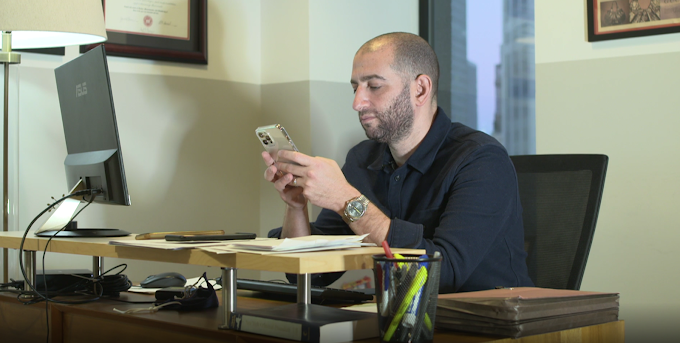
Lead Attorney & Founder
Todd Spodek
Featured on Netflix's "Inventing Anna," Todd Spodek brings decades of high-stakes criminal defense experience to every case.

Need Help With Your Case?
Our experienced criminal defense attorneys are available 24/7 for a confidential consultation.
100% Confidential. Your information is protected.
Frequently Asked Questions
New Jersey reformed its bail system in 2017. Instead of a cash-based system, judges now use a Public Safety Assessment (PSA) to determine whether a defendant should be released pretrial. Most defendants are released with conditions, while those deemed high-risk may be detained. An experienced attorney can argue for favorable release conditions at your detention hearing.
No. You have the constitutional right to remain silent and to have an attorney present during questioning. Anything you say to police can be used against you in court. Politely invoke your rights by saying "I want to speak with my attorney before answering any questions." This cannot be held against you.
Attorney fees vary based on the complexity of the case, the charges involved, and whether the case goes to trial. At Spodek Law Group, we offer transparent pricing and flexible payment plans. We provide a free initial consultation to discuss your case and give you an honest assessment of costs. Investing in quality representation often saves far more in the long run than choosing the cheapest option.
An arraignment is your first court appearance after being charged with a crime. The judge will read the charges against you, and you'll enter a plea (usually not guilty at this stage). The judge will also set bail or release conditions. Having an attorney at your arraignment is critical, as they can advocate for favorable bail terms and begin building your defense strategy from day one.
Why Clients Choose Spodek Law Group
45 seconds that explain our difference