Learn more about Spodek Law Group and how we can help with your case.
You received loan forgiveness from the SBA. You thought that was the end. It wasn’t. Forgiveness is actually when most federal investigations START – because that’s when your original loan application collides with documented reality. The forgiveness process isn’t closing your case. It’s building the prosecution’s evidence file.
Spodek Law Group defends clients facing federal fraud investigations in North Dakota and nationwide. We’ve seen how the PPP forgiveness process becomes a documentary trap, and how early intervention can mean the difference between civil resolution and federal prison. Call 212-300-5196 if your facing questions about a PPP loan in North Dakota.
This article explains what most North Dakota borrowers don’t know: forgiveness doesn’t mean your clear. It means the comparison audit just started. And prosecutors are watching the documentary evidence pile up with every submission you make.
North Dakota’s Unwritten $95,000 Threshold – Where Civil Recovery Becomes Federal Prison
Here’s something federal prosecutors in North Dakota won’t tell you explicitly, but the case data makes obvious. Zero criminal prosecutions for PPP loans under $95,000. None. Not a single one since the program started in 2020.
Every criminal case filed in the District of North Dakota involved loans of $100,000 or more. The pattern isn’t subtle. It’s absolute.
This isn’t about justice or the severity of the fraud. It’s about prosecutorial efficiency. North Dakota federal prosecutors have limited resources, limited time, and career advancement metrics based on conviction rates and case impact. A $90,000 fraud case requires the same investigative resources as a $200,000 case – same agents, same forensic accountants, same grand jury time. But the $200,000 case makes better headlines and justifies the federal expenditure.
So if you fraudulently obtained $94,000, you face civil penalties. The SBA Office of Inspector General handles it – clawback, repayment demand, maybe some fines. If you obtained $95,000, same thing. But cross $100,000? Your facing potential federal indictment. Bank fraud carries 30 years maximum. Wire fraud carries 20. False statements carry 5.
One thousand dollars separates civil recovery from federal prison. The difference isn’t the crime. It’s the prosecutorial cost-benefit analysis.
U.S. Attorney Mac Schneider, who was appointed to the District of North Dakota in 2023, has publicly stated that pandemic fraud remains a top priority through 2026. But the priority has a dollar threshold. Below $95K, your an SBA OIG file number. Above $100K, your a prosecution target.
This matters because defense strategy depends on which track your on. Civil cases can often be resolved through repayment negotiations, settlement agreements, consent orders. Criminal cases end in plea bargains or trials – both of which result in convictions over 81% of the time.
Understanding the threshold isn’t about evading responsibility. It’s about understanding what kind of fight your actually in. And in North Dakota, that fight is determined by wether you crossed six figures.
58% of Prosecutions Start With the Forgiveness Application – Not the Loan
Here’s the statistic that changes everything: 58% of recent North Dakota PPP fraud prosecutions didn’t start because of the original loan application. They started when defendants submitted their loan forgiveness applications 12 to 24 months later.
Think about what that means. The majority of people who got criminaly charged weren’t caught during the loan process. They sailed through that. The loan was approved. The money hit there account. Months passed. They thought they’d gotten away with it – or more commonly, they genuinly thought they’d done nothing wrong.
Then they applied for forgiveness. And that’s when the trap sprung.
The forgiveness application isn’t a simple “check the box” process. It requires documentation. Specific, detailed documentation:
- Tax forms – 940, 941, 1099s if you had contractors
- Bank statements showing how you spent the money
- State quarterly wage unemployment reports
The SBA doesn’t just ask for these documents. The forgiveness application can’t be processed without them. They’re manditory.
And here’s were the trap closes: the SBA compares what you CLAIMED on your original loan application to what you can now PROVE with documentation.
You claimed 15 employees on your Febuary 2020 loan application? Your forgiveness application payroll records better show 15 employees. You claimed $50,000 in average monthly payroll? Your 941 tax forms better reflect that. You claimed you spent the money on payroll, rent, and utilities? Your bank statements better show checks to employees, rent payments, utility bills.
Every discrepancy becomes evidence. Not just evidence of a mistake. Evidence of a prosectuable false statement made to obtain federal funds.
As Todd Spodek explains to clients, the forgiveness application is essentially a documentary confession if there were any exaggerations or errors on the original loan application. Your submitting proof – proof that either validates your claims or exposes them as false. There’s no middle ground.
A Fargo business owner learned this the expensive way. He received $280,000 in PPP loans across two entities. The original applications went through without issue. When he applied for forgiveness, prosecutors noticed that the second company appeared to be a shell – no legitimate operations, no real payroll, no business activity beyond the PPP application. The documentary evidence he submitted for forgiveness proved it. The jury convicted him. The court imposed a 3-year sentence followed by supervised release and full restitution.
The forgiveness application proved the fraud. Not the loan application. The forgiveness application.
This timing matters strategically. If your facing questions about your forgiveness application – if SBA has requested additional documentation, if there’s been unusual delays, if you’ve received letters asking you to “clarify” discrepancies – that’s not bureaucratic slowness. That’s an audit. Possibly a pre-investigative review.
The window to resolve this civilly instead of criminally is still open at that stage. Once the case gets referred from SBA to the Office of Inspector General, and from OIG to the Department of Justice, and from DOJ to a federal prosecutor who presents it to a grand jury, the window closes. You’re in the criminal system.
But during the forgiveness review stage? There’s still room to manuever. To explain. To negotiate. To potentially turn a criminal investigation into a civil repayment matter.
Most people don’t realize they’re in that window until it’s already closed. They think the SBA is “just slow” or “just being thorough.” Meanwhile, an agent is building a case file.
The Documentary Comparison Trap – When Your Forgiveness Proves Your Fraud
The SBA doesn’t investigate PPP loans in isolation. They run a comparison audit. Your original loan application sits in one column. Your forgiveness application documentation sits in the other. Software flags discrepancies. Humans review the flags.
It’s not sophisticated. It’s mechanical. And it’s devastatingly effective.
37,938 Forgiven Loans – Already Approved, Now Flagged for Clawback
You’d think loan forgiveness means the SBA reviewed your application, approved it, and closed the file. That’s what the word “forgiveness” implies.
As of May 2024, the SBA had flagged 37,938 forgiven loans – totaling aproximately $4.6 billion – with what’s called “hold code 70.” These are loans that were already approved for forgiveness. The borrowers recieved forgiveness letters. The loans were marked as forgiven in the SBA system. The borrowers moved on with there lives.
Then SBA went back and flagged them.
Hold code 70 means the SBA suspects the borrower is potentially ineligable for the loan or for loan forgiveness. Issues that trigger hold code 70 include: potential fraud, misuse of program funds, or evidence that a borrower knowingly violated SBA policy.
These aren’t pending applications. These are approved, forgiven loans that SBA is now reconsidering. The borrowers thought they were clear. There not.
And the SBA hasn’t finished reviewing them. As of May 2024, SBA had not completed reviewing those 37,938 loans. The reviews are “ongoing and will continue as resources allow.” SBA is drafting a recovery plan for any loans deemed ineligible. Recovery plan – that’s beaurocratic language for “we’re coming to take the money back.”
But it’s worse than clawback. Hold code 70 loans are often reffered to the SBA OIG for investigation. And SBA OIG refers cases to the Department of Justice. So the $4.6 billion in flagged loans isn’t just facing civil clawback. Some percentage of those borrowers are facing criminal prosecution.
SBA officials told the Government Accountability Office in August 2024 that SBA had referred aproximately 54,000 PPP loans to the OIG for likely fraud. Those referrals included “complete case memos and supporting documentation.” That’s not a casual flag. That’s a prosecutorial package.
Think about what this means if you received forgiveness in 2021 or 2022. You spent the money. You moved on. Your buisness recovered from the pandemic, or it didn’t. Either way, the PPP loan is in the past. Ancient history.
Except it’s not. Your loan might be one of the 37,938 flagged for review. You won’t know until you get a letter – either from SBA demanding repayment, or from a federal agent asking questions, or from a grand jury subpeona demanding documents.
This is what Todd Spodek means when he tells clients that forgiveness doesn’t close the case. It starts a timer. SBA has a 6-year audit window after forgiveness to challenge the loan and refer it to DOJ for criminal prosecution.
You were forgiven in 2021? SBA can challenge it until 2027. Forgiven in 2022? They have until 2028. The statute of limitations for PPP fraud is 10 years. Congress extended it in August 2022 specificaly because there were so many cases in the pipeline. If you received a PPP loan in April 2020, federal prosecutors have until April 2030 to charge you.
It’s January 2025. Your not even halfway through the statute of limitations for 2020 loans.
37,938 forgiven loans. $4.6 billion. Still under review. Forgiveness was an illusion.
The 6-Year Audit Window Hiding Behind Your Forgiveness Letter
The SBA forgiveness letter doesn’t say this, but buried in the program rules is a critical timeframe: SBA has 6 years after forgiveness to audit your loan, chalenge the forgiveness determination, and refer your case to the Department of Justice.
That forgiveness letter you recieved in 2021? SBA can audit it until 2027. The letter you got in 2022? They have until 2028. Most borrowers don’t know this. They think forgiveness is finall. It’s not. It’s conditional – conditioned on SBA not discovering problems during the 6-year window.
And SBA is actively looking. The 37,938 loans flagged with hold code 70 prove that. SBA didn’t flag those loans during the initial forgiveness review. They flagged them later – months or years after forgiveness was granted.
What Triggers a Post-Forgiveness Audit?
What triggers a post-forgiveness audit? Anything:
- Referral from another agency – IRS notices discrepancies between your PPP loan payroll claims and your actual payroll tax filings, refers it to SBA OIG
- Whistleblower – a former employee, a buisness partner, a competitor filing a complaint
Can SBA audit a PPP loan that’s already forgiven? Yes. Absolutly. The 6-year window exists specificly for that purpose.
of criminal appeals in NJ result in reversal or new trial
of cases that go to trial result in acquittal with private counsel
Statistics updated regularly based on latest available data
Saying 'my accountant told me to do it' isn't automatic protection. You need documentation of the advice AND proof you followed it exactly as given.
Returning items you didn't buy, using fake receipts, or 'wardrobing' (wearing and returning) isn't a minor issue – it's felony theft with serious consequences.
What happens if the audit finds problems? Three possible outcomes: civil clawback (best case), referral to SBA OIG for investigation (the case moves from civil to criminal), or direct referral to DOJ (criminal investigation starts immediatly).
And remember: this can happen years after forgiveness. You thought you were clear in 2022. It’s now 2025. You get a letter. SBA is auditing your loan. They’ve found discrepencies. They want additional documentation. Or they’re referring the case to OIG. Or theirs a federal agent at your door.
Three years later. You barely remember the details of the application. You’ve discarded records. Your accountant has moved on. Your buisness has changed ownership or closed. And now your trying to defend decisions you made in the chaos of 2020 based on documents you no longer have.
Spodek Law Group’s approach focuses on proactive review – helping clients assess their exposure during the 6-year window rather then waiting for SBA to knock. Because once SBA initiates an audit, your options narrow. Once they refer to OIG, they narrow further. Once DOJ gets involved, your looking at criminal charges.
You might be three years past forgiveness and think your safe. Your not. Your still in the window.
81.8% Conviction Rate – The Math Says You Lose
If you get charged with PPP fraud, the statistical probability of conviction is 81.8%. Out of 3,096 defendants charged, 2,532 were found guilty as of December 31, 2024.
The general federal conviction rate is already high – around 90%. But PPP fraud conviction rates are even higher in certain contexts. The IRS Criminal Investigation division has obtained a 98.5% conviction rate in prosecuted COVID fraud cases over the last four years.
98.5%. If IRS-CI is investigating your PPP loan, your statistical chance of acquittal is 1.5%.
Why is the conviction rate so high? Because the crime is documentary. The evidence isn’t witness testimony that can be cross-examined or impeached. The evidence is your loan application, your forgiveness application, your bank records, your tax returns. Documents you signed. Documents you submited. Documents that either say what prosecutors claim they say, or they don’t.
Prosecutors don’t need to prove you intended to commit fraud through your state of mind. They prove it through your actions: you claimed 15 employees, but documentation shows 10. You claimed $60,000 monthly payroll, but tax records show $35,000. You certified the funds were used for payroll, but bank records show transfers to personal accounts.
The documents speak. And juries beleive documents.
Defense strategies in PPP fraud cases usually focus on intent. “My client made an honest mistake.” “The guidance was unclear.” “The accountant filled out the application.” “It was chaos in 2020.” These defenses sometimes work. That’s why the conviction rate is 81.8% instead of 100%. But sometimes isn’t often. 4 out of 5 defendants convicted.
And the sentences aren’t light. Of the 373 individuals sentenced for COVID-related fraud through 2024, the average sentence was 34 months in federal prison. That’s almost 3 years. 81% of convicted defendants recieved prison time – not probation, not home confinment. Prison.
The Fargo buisness owner I mentioned earlier? 3 years. Right in line with the average. Amir Aqeel, who led a $20 million PPP fraud ring in Houston, received 15 years. Carl Delano Torjagbo, who obtained a fraudulent $9.6 million PPP loan and filed fraudulent tax returns, was convicted by a federal jury on bank fraud, wire fraud, and money laundering.
The point isn’t that everyone gets 15 years. The point is that the conviction rate is so high that going to trial is statisticaly suicidal. Which means most defendants plead guilty. Which means they accept whatever sentence prosecutors offer in the plea agreement.
Aproximately 9 out of every 10 federal prosecutions are resolved through plea agreements. PPP fraud cases follow that pattern. You don’t go to trial. You negotiate a plea. The question is: what leverage do you have in that negotiation?
If you’ve already talked to federal agents without a lawyer and made statements they can use against you, your leverage is zero. If you’ve submitted forgiveness applications with obvious discrepencies, your leverage is minimal. If the documentary evidence is overwhelming and your defense is “it was an honest mistake,” your leverage is weak.
But if you have counsel early – before charges are filed, before the grand jury, sometimes even before SBA refers to OIG – there’s room to negotiate. To potentially resolve civily instead of criminally. To avoid the 81.8% conviction odds altogether.
Once your indicted, the math takes over. 81.8% chance of conviction. 34 months average sentence. 81% chance of prison time. Those are the numbers. The question is wether you want to roll those dice or wether you want to explore options before the indictment happens.
The Narrow Window Before the Documentary Trap Closes
If you’ve received a PPP loan and any of the following apply, the window for proactive intervention is still open – but it’s closing:
- You haven’t yet applied for forgiveness, but there were inaccuracies on your loan application
- You’ve applied for forgiveness, and SBA has requested additional documentation or clarification
- You’ve received forgiveness, but you know there were discrepencies between your loan application and the documentation you submitted
- You’ve been contacted by SBA OIG, a federal agent, or received a grand jury subpeona
These are inflection points. Moments were the trajectory can still be altered. Not easily. Not without cost. But altered.
Once certain lines are crossed, the options narrow:
- After indictment: The option is plead guilty or go to trial (81.8% conviction rate, 34 months average sentence)
- After grand jury subpoena: The investigation is advanced and prosecutors are gathering evidence for indictment
- After formal DOJ referral: The case is in the criminal system
- After hold code 70 flag: Your forgiven loan has been flagged for review – this is early enough that intervention can still matter
The earlier you act, the more options exist. The later you wait, the more the options collapse into a single path: criminal prosecution.
What Early Intervention Looks Like
Reviewing your loan application and actual business records to identify discrepencies. Determining wether civil resolution is possible, what that would cost, what the alternatives are. In some cases, reaching out to SBA or OIG before they reach out to you – voluntary disclosure, demonstrating good faith. Preserving all records related to the loan.
Avoiding additional false statements: If SBA or federal agents contact you, avoid the instinct to explain or minimize. Every statement you make can be used against you. Every explanation that contradicts documentary evidence becomes a new false statement charge. Polite silence and immediate legal consultation is the only safe responce.
The mistake most people make is waiting. Waiting to see if SBA audits the loan. Waiting to see if forgiveness goes through without issues. Waiting to see if anyone notices the discrepencies. That waiting is strategic from the government’s perspective. The longer you wait, the more your options narrow. The more evidence accumulates. The stronger the prosecution’s case becomes.
And remember: the statute of limitations is 10 years. The SBA audit window is 6 years after forgiveness. You can wait 4 years and still be well within the prosecution timeline. Waiting doesn’t run out the clock. It just gives investigators more time to build there case.
37,938 forgiven loans are currently flagged for review. Some of those borrowers know there were problems with their applications. Some don’t. But all of them are in the 6-year audit window. All of them can still be reffered to DOJ.
The forgiveness application was the trap. The question now is wether you realize your in it before the trap fully closes, or wether you wait until a federal agent explains it to you.
Spodek Law Group represents clients at every stage of this process – from pre-forgiveness application strategy to post-indictment defense. But the earlier we’re involved, the more options exist. Call 212-300-5196 if your facing questions about a PPP loan in North Dakota or anywhere in the federal system.
The documentary trap is already built. The question is wether there’s still time to escape it.
Indianapolis PPP Loan Fraud Lawyers
What Are the Federal Charges for PPP Loan Fraud?
Federal Sentencing Guidelines for Bank Fraud (18 USC 1344)
*Results may vary depending on your particular facts and legal circumstances.
"Mr. Spodek was great. He was very attentive…"
Mr. Spodek was great. He was very attentive and knowledgeable about my matter. He was available when needed to discuss things. Definitely recommend him to any and everyone!
Reduction in pretrial jail population since NJ bail reform implementation.
Source: NJ Judiciary Annual ReportApproval rate for properly filed expungement petitions in NJ.
Source: NJ Courts Statistical ReportCommon Mistakes to Avoid
Actually Stay Silent
Most people know they have the right to remain silent but still talk to police. Anything you say can and will be used against you. Politely decline to answer questions until your attorney is present.
Bail Conditions Are Enforceable
Violating bail conditions, even minor ones, can result in immediate re-arrest and make it much harder to obtain bail again. Follow every condition to the letter.
Proven Track Record
Recent Case Results
*Results may vary depending on your particular facts and legal circumstances.
SEE ALL CASE RESULTSWhat Our Clients Say
"When the federal government came after me, Todd and his team were the only ones who made me feel like I had a real chance. They understood the system inside and out and got my case dismissed."— Michael T., Federal Defense Client MORE REVIEWS
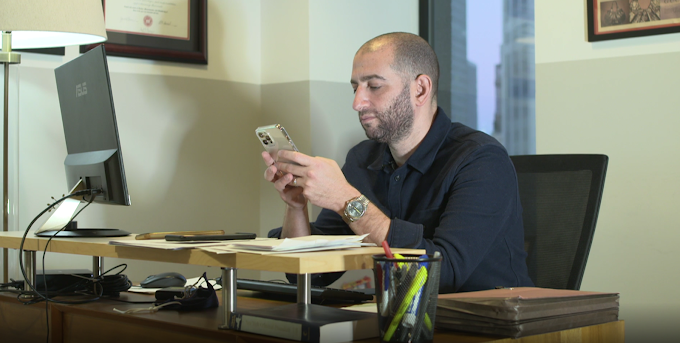
Lead Attorney & Founder
Todd Spodek
Featured on Netflix's "Inventing Anna," Todd Spodek brings decades of high-stakes criminal defense experience to every case.

Need Help With Your Case?
Our experienced criminal defense attorneys are available 24/7 for a confidential consultation.
100% Confidential. Your information is protected.
Frequently Asked Questions
New Jersey reformed its bail system in 2017. Instead of a cash-based system, judges now use a Public Safety Assessment (PSA) to determine whether a defendant should be released pretrial. Most defendants are released with conditions, while those deemed high-risk may be detained. An experienced attorney can argue for favorable release conditions at your detention hearing.
No. You have the constitutional right to remain silent and to have an attorney present during questioning. Anything you say to police can be used against you in court. Politely invoke your rights by saying "I want to speak with my attorney before answering any questions." This cannot be held against you.
Attorney fees vary based on the complexity of the case, the charges involved, and whether the case goes to trial. At Spodek Law Group, we offer transparent pricing and flexible payment plans. We provide a free initial consultation to discuss your case and give you an honest assessment of costs. Investing in quality representation often saves far more in the long run than choosing the cheapest option.
An arraignment is your first court appearance after being charged with a crime. The judge will read the charges against you, and you'll enter a plea (usually not guilty at this stage). The judge will also set bail or release conditions. Having an attorney at your arraignment is critical, as they can advocate for favorable bail terms and begin building your defense strategy from day one.
Why Clients Choose Spodek Law Group
45 seconds that explain our difference