Learn more about Spodek Law Group and how we can help with your case.
You are reading this at night. Probably late. The question has been circling in your head for days now, maybe weeks. Your lawyer said something about a plea offer and you did not like what you heard. The number sounded too high. The years sounded too long. Now you are wondering if trial is the answer. If fighting is the way out.
At Spodek Law Group, we have represented hundreds of clients facing federal charges, including PPP fraud cases that carry serious prison time. Our mission is not to tell you what you want to hear. Our mission is to tell you what you need to know so you can make the decision that actually serves your life, your family, and your future.
Here is the truth that nobody wants to say out loud: the “choice” between trial and plea is not really a choice at all. The federal system has been designed, very carefully, to make trial financially and mathematically suicidal for most defendants. Understanding this is the first step toward making a real decision instead of an emotional one.
The Evidence Problem You Cannot Outrun
The bank records. Those are what keep prosecutors up at night celebrating. Not because there evil or out to get you specificaly. Not because they have some vendetta against small business owners who made mistakes during the chaos of a pandemic. Because PPP fraud leaves a paper trail that is almost impossible to explain away at trial. The evidence exists in multiple government databases and financial institutions, and it all points in one direction.
Think about what the government has. They have the application you submitted to the Small Business Administration. They have your signature attesting that everything was true. They have the bank records showing exactly were the money went after it hit your account. They have the spending patterns that show wheather the money was used for payroll or for personal expenses like cars and watches. And in many cases, they have text messages or emails were you discussed the loan with others.
Look, nobody wants to say this out loud. But heres the thing about PPP fraud cases that makes them diffrent from other federal crimes. The evidence is not circumstantial. Its not about what you meant to do or what you were thinking. Its about documents. Documents you created. Documents you signed. Documents that show exactly what happend to every dollar of that money after you recieved it.
You signed the application. Thats it. Thats the governments case.
Every dollar has a destination. The government knows were yours went. They have subpoenaed your bank, your credit card companies, your car dealerships. They know about the Rolex watches. They know about the luxury cars. They know about the vacations to Miami and Vegas. They know about the renovations to your house.
And heres what your lawyer wont tell you directly becuase its uncomfortable: if you go to trial, all of this comes out in front of a jury. The photos of your new car. The receipts from your trips. The text messages bragging about free money. A jury that has zero sympathy for someone who took pandemic relief money and spent it on luxury goods while other businesses were closing there doors forever. Juries in 2025 have absolutly no patience for PPP fraud defendants.
Heres the reality that most defendants refuse to accept: the documentary evidence in PPP cases is almost always overwhelming. These are cases were your own documents tell the story the government wants to tell.
What a 93% Conviction Rate Actualy Means For You
93%. Read that number again. Let it sink in.
Thats the federal conviction rate. Some sources say 97%. Either way, its not 50/50 like in the movies were the hero wins. Its not 80/20 were you have a fighting chance. The government does not bring cases they might loose. If they charged you, they beleive they already have you.
OK so heres the thing nobody likes to admit. Every defendant believes there case is different. Every defendant thinks the jury will see the truth that the prosecutors are hiding. Every defendant thinks the prosecutor is overreaching or the evidence is weaker then it looks.
You probly think that too. Your not alone. But that belief is not evidence. That belief is hope. And hope is not a trial strategy.
Lets do the math together. If 93 out of 100 defendants are convicted, that means only 7 walk free. Seven people out of a hundred. Now ask yourself: what makes you believe you are in the 7? What makes your case so different that you will succeed were 93 others failed?
You probly are not that person. Nobody thinks they are going to be the one who loses. Everyone thinks there situation is unique, that there circumstances are diffrent, that the jury will understand there side of the story.
I am not saying this to be cruel or to crush your spirit. I am saying this becuase prosecutors are counting on you to believe you are special. They are counting on your pride to override your math. They are counting on you to go to trial so they can convict you and sentance you to three times what the plea offer was.
Its worse odds then buying a lottery ticket. Actualy, I cannot think of anything with worse odds that people still regularly choose to do.
Real Defendants Who Made The Wrong Choice
Stephanie Hockridge was a television news anchor in Arizona. Her husband Nathan Reis was one of the founders of Blueacorn, a company that processed PPP loan applications during the pandemic. When the feds came knocking with charges of conspiracy to commit wire fraud, they each made a different choice.
Nathan Reis took the plea. He pleaded guilty.
Stephanie Hockridge decided she would fight. She would go to trial. She would prove her innocence.
Same case. Same evidence. Same conduct. Same co-defendants. They were married to each other, charged together in one of the largest PPP fraud schemes prosecuted in 2024-2025. The Blueacorn case involved processing fraudulent PPP applications worth tens of millions of dollars.
Nathan Reis pleaded guilty to conspiracy to commit wire fraud. He accepted responsibility. He cooperated with the government. He is serving his time right now. He will be out in a reasonable timeframe. He will see his family again.
Stephanie Hockridge decided to fight at trial. In June 2025, a federal jury in Fort Worth Texas convicted her on the same charge her husband pleaded to. In November 2025, she was sentenced to 10 years in federal prison. She was also ordered to pay $63 million in restitution jointly with her co-defendants.
She is sitting in federal prison right now. For 10 years. Her husband is serving less then half that amount.
Think about that. Same case. Same evidence. Same conduct. Same marriage. One took the plea, one went to trial becuase she wanted to fight. The diffrence between them is years and years of imprisonment.
And theres another defendant whose story I know well. His lawyer offered him a plea deal for 7 years in federal prison. He thought the government was bluffing. He thought the jury would see through the prosecution theory. He thought he was in the 7%.
A defendant rejected a 7-year plea offer, went to trial, lost badly, and recieved 15 years in federal prison. Same conduct. Same evidence. The only diffrence was exercising his constitutional right to trial.
7 years became 15 years. Thats the trial penalty in action. Thats what the “choice” to go to trial actualy costs when you loose.
Its like watching two people jump from the same building, except one has a parachute and one decided they didnt need one because they believed they could fly…
But wait. Sometimes trial IS the right choice. I am not telling everyone to plead guilty. That would be wrong.
There are defendants who should fight there cases. There are rare cases were trial is not irrational. There are situations were the plea offer is so incredibly harsh that trial literally cannot make it worse. But you need to know wheather you actualy fit these narrow criteria or wheather your just hoping you do.
Three conditions. All three must be true. If any one is missing, trial is probly irrational.
First, the governments evidence has genuine gaps. Not small gaps. Real gaps. Missing witnesses they need but dont have. Broken chain of custody. Contradictory statements from key prosecution witnesses. If the government has your signature on the PPP application and bank records showing you spent the money on luxury items, you do not have evidence gaps.
Second, the plea offer is already so harsh that trial cannot make it meaningfully worse. If your plea offer is 15 years and trial maximum is 20, the additional 5 years might be worth the gamble. If your plea offer is 18 months and trial maximum is 10 years, you have absolutly everything to loose.
of criminal appeals in NJ result in reversal or new trial
defendants enrolled in NJ pretrial intervention programs annually
Statistics updated regularly based on latest available data
Returning items you didn't buy, using fake receipts, or 'wardrobing' (wearing and returning) isn't a minor issue – it's felony theft with serious consequences.
If you're under investigation for fraud, the government can freeze your assets before charging you. Having emergency funds in a separate name may be crucial.
Third, you have a specific factual defense, not just a general denial. “I didnt do it” is not a factual defense. “My employee submitted the application without my knowledge and heres the evidence proving that” is a factual defense. “I misunderstood the rules” is not a defense at all under the law.
Thats it. Thats the list. Three conditions. All three must be met.
But heres what separates defendants who SHOULD fight from those who just WANT to fight: evidence strength and plea delta. If the government has your signature on the application and has tracked your spending on luxury goods, you are not in the 7%. Know which category you actualy fall into.
How We Turn Terrible Plea Offers Into Survivable Sentences
The first plea offer is never the final plea offer. Its a test. The government wants to see how hard you will fight. At Spodek Law Group, we understand deeply that plea negotiation is were the real value is created for most PPP fraud defendants.
OK so heres were most attorneys mess this up. They treat the plea offer like its carved in stone. They tell you the number and wait for your answer. But that is not how federal plea negotiation actualy works.
Here is what Todd Spodek does differently. We start by aggressively attacking the loss calculation. The governments loss number drives absolutly everything in federal sentencing. If they say you stole $500,000 and we can prove the real number is $200,000, your guidelines drop dramaticaly. Every dollar matters.
Then we build a mitigation package. Thats the story of who you are beyond this charge. Your family circumstances. Your community contributions. Your mental health factors. Your cooperation. Every piece of evidence that shows the judge you are a human being, not just a number.
Acceptance of responsibility gets you 2-3 levels off the guidelines. That can be the diffrence between 7 years and 10 years. But you only get that credit if you plead guilty in a timely manner. Wait too long and you loose it forever.
And heres something that changes absolutly everything in multi-defendant cases: if co-defendants exist, someone will flip first. The first cooperator gets the best deal. The government gives the most substantial assistance credit to whoever comes forward first. The question is wheather that first cooperator will be you or wheather you will be the person they flip on.
The first offer is a test. Make the government work for there conviction. But know the real fight happens in the negotiation room, not the court room. Thats were sentences get reduced. Thats were years get shaved off. Thats were families get saved.
At Spodek Law Group, this is what we do every single day for clients facing PPP fraud charges. We turn terrible situations into survivable outcomes through aggressive, strategic negotiation with federal prosecutors who respect the work we do.
Riverside County PPP Loan Fraud Lawyers
Should I Take My PPP Fraud Case to Trial?
Sacramento County PPP Loan Fraud Lawyers
*Results may vary depending on your particular facts and legal circumstances.
"Mr. Spodek was great. He was very attentive…"
Mr. Spodek was great. He was very attentive and knowledgeable about my matter. He was available when needed to discuss things. Definitely recommend him to any and everyone!
Reduction in pretrial jail population since NJ bail reform implementation.
Source: NJ Judiciary Annual ReportApproval rate for properly filed expungement petitions in NJ.
Source: NJ Courts Statistical ReportCommon Mistakes to Avoid
Actually Stay Silent
Most people know they have the right to remain silent but still talk to police. Anything you say can and will be used against you. Politely decline to answer questions until your attorney is present.
Bail Conditions Are Enforceable
Violating bail conditions, even minor ones, can result in immediate re-arrest and make it much harder to obtain bail again. Follow every condition to the letter.
Proven Track Record
Recent Case Results
*Results may vary depending on your particular facts and legal circumstances.
SEE ALL CASE RESULTSWhat Our Clients Say
"When the federal government came after me, Todd and his team were the only ones who made me feel like I had a real chance. They understood the system inside and out and got my case dismissed."— Michael T., Federal Defense Client MORE REVIEWS
Lead Attorney & Founder
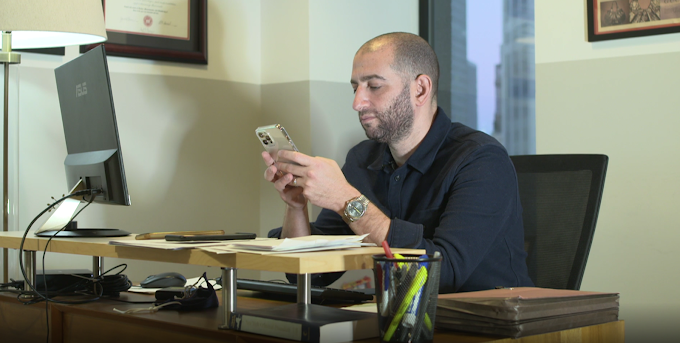
Todd Spodek
Featured on Netflix's "Inventing Anna," Todd Spodek brings decades of high-stakes criminal defense experience to every case.

Need Help With Your Case?
Our experienced criminal defense attorneys are available 24/7 for a confidential consultation.
100% Confidential. Your information is protected.
Frequently Asked Questions
New Jersey reformed its bail system in 2017. Instead of a cash-based system, judges now use a Public Safety Assessment (PSA) to determine whether a defendant should be released pretrial. Most defendants are released with conditions, while those deemed high-risk may be detained. An experienced attorney can argue for favorable release conditions at your detention hearing.
No. You have the constitutional right to remain silent and to have an attorney present during questioning. Anything you say to police can be used against you in court. Politely invoke your rights by saying "I want to speak with my attorney before answering any questions." This cannot be held against you.
Attorney fees vary based on the complexity of the case, the charges involved, and whether the case goes to trial. At Spodek Law Group, we offer transparent pricing and flexible payment plans. We provide a free initial consultation to discuss your case and give you an honest assessment of costs. Investing in quality representation often saves far more in the long run than choosing the cheapest option.
An arraignment is your first court appearance after being charged with a crime. The judge will read the charges against you, and you'll enter a plea (usually not guilty at this stage). The judge will also set bail or release conditions. Having an attorney at your arraignment is critical, as they can advocate for favorable bail terms and begin building your defense strategy from day one.
Why Clients Choose Spodek Law Group
45 seconds that explain our difference